Field Story
Talking Peace, Acting Peace and Building Peace.
With more than 15 years of experience in interreligious dialogue, this reflection explores the power of listening, understanding and human connection in building peace. Dialogue is more than conversation—it can transform differences into relationships and create communities rooted in compassion and collaboration. This spirit also inspired **Ecopeace Teen Café**, bringing people together across cultures, faiths and identities while recognising our shared responsibility for one another and the planet. In an increasingly divided world, creating spaces for dialogue is essential for peace, justice and healing.

For over 15 years, I have been part of the interreligious dialogues, a space that brings together people from different religions, traditions, regions, and cultures. And each time I return, I’m reminded why I keep coming back.
Dialogue has often been questioned: Is it enough? Can conversations help in a world so divided?
From what I’ve seen and experienced, the answer is yes.
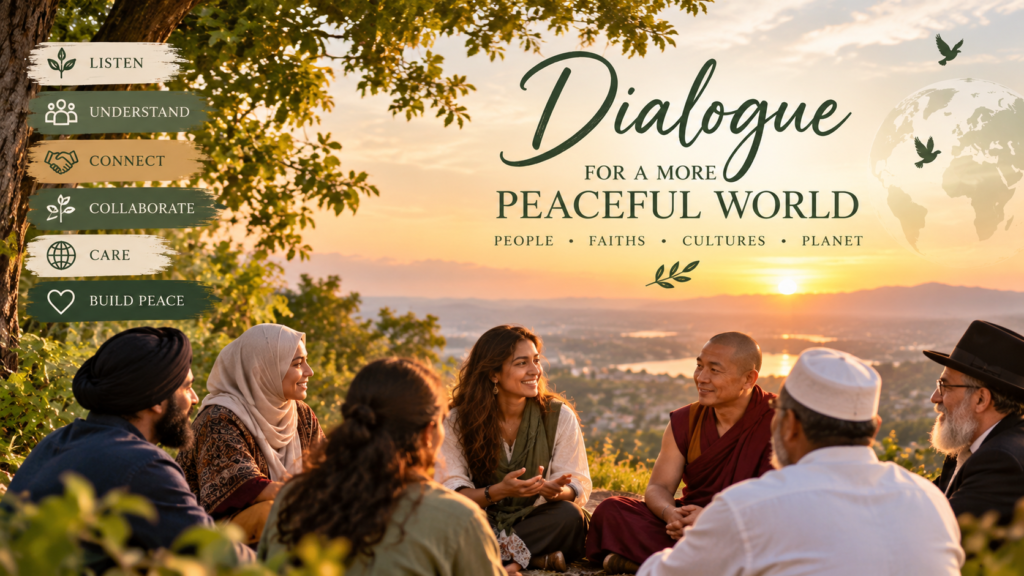
Dialogues are not just conversations for the sake of talking. They are powerful moments of truth and transformation. In these spaces, people don’t come to win arguments, they come to be heard, to understand, and to connect. There is something human in listening deeply to another’s story, and even more powerful in seeing people walk away not as strangers or ‘others’, but as a community, ready to collaborate, support one another, and build peace.
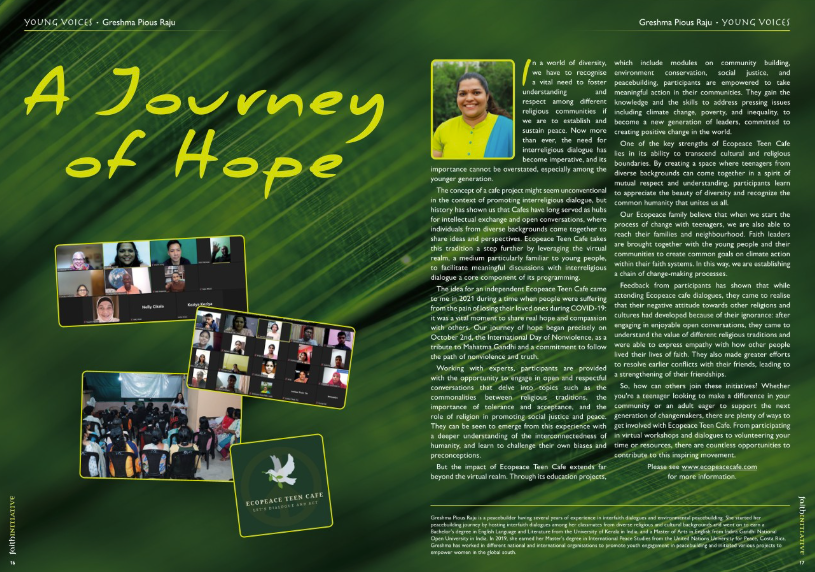
This spirit of dialogue and deep connection is what inspired Ecopeace Teen Café, a global online space where we bring people together across differences. Over the years, we’ve realised that although the world identifies us by our colour, religion, nationality, or language, beneath it all, we are human and we are interdependent. That interdependence extends not just to each other, but to our planet and all forms of life. Caring for one another also means caring for our shared Earth.
In recent times, the daily news is filled with heartbreaking events: children being attacked, communities displaced, and the environment in crisis. We are living in a worsening humanitarian crisis, and silence is not an option.
What we need today is greater compassion, deeper humility, and the courage to engage not with anger or fear, but with open hearts and listening ears. This is the time to create more spaces for dialogue, not fewer. Dialogues are becoming part of the solution within communities, among policymakers, and across leadership. We deserve a better world, where peace and justice prevail.
Dialogue is not just for our present, but for future generations who will live with the choices we make today. Let us be remembered not as the generation that observed in silence, but as the one that chose to act with kindness, to speak up for peace, and to build bridges where others built walls.
Let’s have dialogue for peace, dialogue for justice, and dialogue for healing.
Share this editorial